Frequently Asked Questions
The most-asked questions about cities of china.
What does the topic of Chinese cities actually cover?
It spans roughly 600-plus urban areas across the country, from megacities like Shanghai and Beijing to smaller prefecture-level towns. Together they form one of the densest and most rapidly evolving urban landscapes on the planet.
Which city should a newcomer explore first?
Beijing is the most commonly recommended starting point because it anchors the political and cultural narrative, with layers of history stretching back about three millennia. Shanghai is a close second for those drawn to modern commerce and coastal energy.
Who are the most prominent figures associated with Chinese cities?
There is no single cast of characters, but leaders such as Qin Shi Huang (early urban planning), Mao Zedong (post-1949 urban reshaping), and Deng Xiaoping (the reform-era city boom) loom large in the narrative. In film and literature, the cities themselves often take on character-like roles.
What geographic regions define the urban landscape?
The eastern coastal belt (Shanghai, Guangzhou, Shenzhen) drives most economic activity, while the northern plains cluster (Beijing, Tianjin, Shijiazhuang) carries political weight. Western and southwestern cities like Chengdu, Chongqing, and Xi'an add distinct topographic and cultural flavor.
What makes Chinese cities stand out on the global stage?
The coexistence of centuries-old neighborhoods directly beside glass towers, combined with the world's largest high-speed rail network, is hard to replicate. The sheer volume of internal migration—hundreds of millions moving to urban centers—remains without parallel.
What are some notable historical moments tied to Chinese cities?
The 1949 founding of the People's Republic, centered on Beijing, redrew the identity of every major city. The 1978 opening-up policy transformed Shenzhen from a small fishing village into a metropolis of over seventeen million within four decades.
How many cities does China officially have?
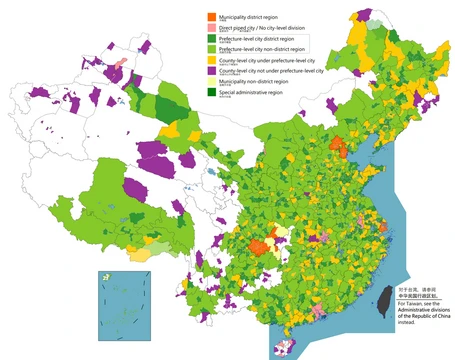
There are 292 prefecture-level cities plus four direct-controlled municipalities: Beijing, Shanghai, Tianjin, and Chongqing. Below that tier, hundreds of county-level cities and towns round out the broader urban system.
Which cities are the biggest economic engines?
Shanghai, Shenzhen, Guangzhou, and Beijing consistently top GDP rankings and attract the most foreign investment. The Pearl River Delta and Yangtze River Delta city clusters together account for a substantial share of the nation's output.
Are there lesser-known cities worth exploring?
Pingyao in Shanxi preserves a nearly intact Ming-dynasty walled town, while Dunhuang in Gansu sits at the crossroads of the ancient Silk Road. Kunming in Yunnan offers a subtropical climate and ethnic diversity that set it apart from the northern megacities.
What is the current urbanization trend in China?
Roughly 65 percent of the population now lives in urban areas, a figure that has climbed steadily since the 1980s. Growth is increasingly shifting toward so-called new first-tier cities like Hangzhou, Wuhan, and Xi'an as the coastal hubs mature.